

Fed Chair Ben Bernanke Speaks on Economic Recovery

February 15th, 2012

Post from Atlanta Real Estate Forum…..

Those attending the International Building Show in Orlando, Fla. last week were treated to an appearance by Federal Reserve Chairman Ben Bernanke. Citing that restraints on credit for home buyers and home builders alike continue to impede the housing and economic recovery, Bernanke stated, “Banks remain reluctant to make loans, both to mortgage borrowers and home builders.”

The Fed chairman said that his message to regulators is for them to take a balanced approach and to approve loans for those who meet sound underwriting standards. “Do not turn away creditworthy borrowers, and that includes home builders,” he said.

“Chairman Bernanke understands that today’s tight credit conditions are preventing qualified buyers from obtaining home loans and builders from getting financing for the construction of viable new home building projects – and that this is harming the housing market as well as the overall economy,” said Barry Rutenberg, the newly elected chairman of the National Association of Home Builders (NAHB) and a home builder from Gainesville, Fla.

Noting that many local markets have an overhang of empty and foreclosed homes, the current harsh lending environment, and that the weak housing market is impairing the financial health of home owners, Bernanke said that the “state of the housing market has been a key impediment to a faster recovery.”

“For these reasons, and because the troubled housing market depresses construction activity and employment, we need to continue to develop and implement policies that will help the housing sector get back on its feet,” the Fed chairman said. “No single solution will be sufficient. But sustained efforts to address the many interlocking factors holding back the housing market will pay dividends in the long run.”

He also added that the Fannie Mae and Freddie Mac limits on investor loans are counterproductive in the current economic climate and that policy should be to encourage more loans to help ease the inventory of distressed properties.

Bernanke’s remarks on the need to take more aggressive action to support a housing recovery confirms what the nation’s home builders have been saying for some time and reiterates similar themes in a Jan. 4 white paper provided to Congress, in which the Federal Reserve noted that “restoring the health of the housing market is a necessary part of a broader strategy for economic recovery.”

Fixing the nation’s housing woes is taking on a sense of increasing urgency in Washington. In unveiling a new plan last week, President Obama cited the important role that housing plays in the economy.

“A lack of building demand has kept hundreds of thousands of construction workers idle,” said Obama. “Everybody involved in the home building business – folks who make windows, folks who make carpets – they’ve all been impacted. The challenge is massive in size and scope, because we’ve got a multi-trillion dollar housing industry.”

Yesterday, the President reiterated the high value that Americans place on homeownership and the need to help home owners while commenting on the mortgage settlement agreement reached between the states and five major banks.

“We can’t wait to get things done and to provide relief to America’s home owners,” Obama said. “We need to keep doing everything we can to help home owners and our economy.”

“You work and you save your entire life to buy a home,” Obama added. “That’s where you raise your family, that’s where your kids’ memories are formed. That’s your stake, your claim on the American Dream.”

With the proper policies in place, housing can serve as an engine of job growth, said Rutenberg, who noted that building 100 homes creates more than 300 full-time jobs and generates $8.9 million in federal, state and local revenues to fund local schools and strengthen communities across the nation.

“In this key election year, the voters are calling on the Administration and Congress to take actions to restore the health of the housing industry in order to create jobs, increase household wealth and keep the economy on an upward trajectory,” he added.

Share and Enjoy:
  • Digg
  • del.icio.us
  • Facebook
  • Google
  • Reddit
  • StumbleUpon
  • Technorati
  • Tumblr
  • Yahoo! Buzz

The Truth About the Atlanta Market

February 15th, 2012

A post from Atlanta Real Estate Forum…..

Atlanta certainly has taken a beating in the local and national media over the past week. The latest Standard & Poor’s Case-Shiller Home Price Index report was released, ranking Atlanta second only to Detroit, with a price index of 88.93, down from a high of 136.47 in mid-2007. This represents the fourth straight month of decline for the city, and a 13% year-over-year decline, the largest loss of any metropolitan area in the country. This brings the median home price in Metro Atlanta to $178,000, down 12% from December 2010, the lowest it has been since 1998.

Not all areas in Metro Atlanta have suffered from such drastic deflation. Sub-markets inside the I-285 corridor, along with areas of North Fulton County have retained value far better than homes in the outlying areas. With foreclosure and short-sale inventory at an excess in the suburbs, prices continue to fall, dragging averages for the entire metro area down.

On the bright side, inventory in the area is decreasing. Currently, metro Atlanta’s home supply is at a 10-year low, with the number for new construction being the lowest it has been in 15 years.  In 2009, there were over 120,000 available units on the market. This number has shrunk to under 50,000 units today.

More positive news arrived when the latest unemployment numbers were released. The national unemployment rate is down to 8.3%, the lowest it has been in three years. In Georgia, unemployment decreased for the third month in a row, to 9.7%, down from a high of 10.4% in December 2010.

More people entering the job market, coupled with low supply and record low prices and interest rates could spell relief for metro Atlanta home sales. According to the National Association of Realtor’s Pending Home Sales Index, sales reached a 19-month high in November and the trend continues.

Share and Enjoy:
  • Digg
  • del.icio.us
  • Facebook
  • Google
  • Reddit
  • StumbleUpon
  • Technorati
  • Tumblr
  • Yahoo! Buzz

How to Make the Most of the Current Mortgage Rates

February 15th, 2012

If you are gearing up to start the house hunt this spring, there are a number of things to keep in mind, even if you have a great credit score. While mortgage rates are lower than ever, it can be very difficult to get financing unless you are in the top tier of credit worthiness. Even worse, the current expectation that loans are hard to get is allowing those with good credit to settle on offers that aren’t the best for them. Ilyce Glink offers some tips on how to hit the ground running on your housing search in her article on the Equifax Finance Blog, titled “New Year’s Resolutions for Homebuyers in 2012.”

 
Step one is to consider your credit. You can order your credit reports online for free once a year and for a small fee if you need to check them more frequently.  However, you should keep in mind that requesting your score frequently will cause it to decrease. If your score is strong, as in 780 or higher, you can qualify for great rates and will be looked upon favorably by lenders. If your credit score is low, now is the time to fix your bad habits and build your score back up before rates begin to rise.
 
When it comes time to talk to lenders, you should consider shopping around. While it is time consuming, you can get great deals by consulting four or five lenders before signing an application. Make sure to consult different types of lenders, including a big bank lender, a small local lender, a credit union, a mortgage broker and an online lender. Use the knowledge you gain to negotiate with lenders and ask for better deals to start your home buying process, and don’t be afraid to challenge what you are offered.
 
There are some other tips in the full article, so be sure to check it out as well as the other informative sections on Equifax Personal Finance Blog: credit, insurance, taxes, retirement, real estate and more!
 
Thanks to Atlanta Real Estate Forum for this great information!
Share and Enjoy:
  • Digg
  • del.icio.us
  • Facebook
  • Google
  • Reddit
  • StumbleUpon
  • Technorati
  • Tumblr
  • Yahoo! Buzz

Home improvement myths

January 14th, 2012
 

Home improvement myths

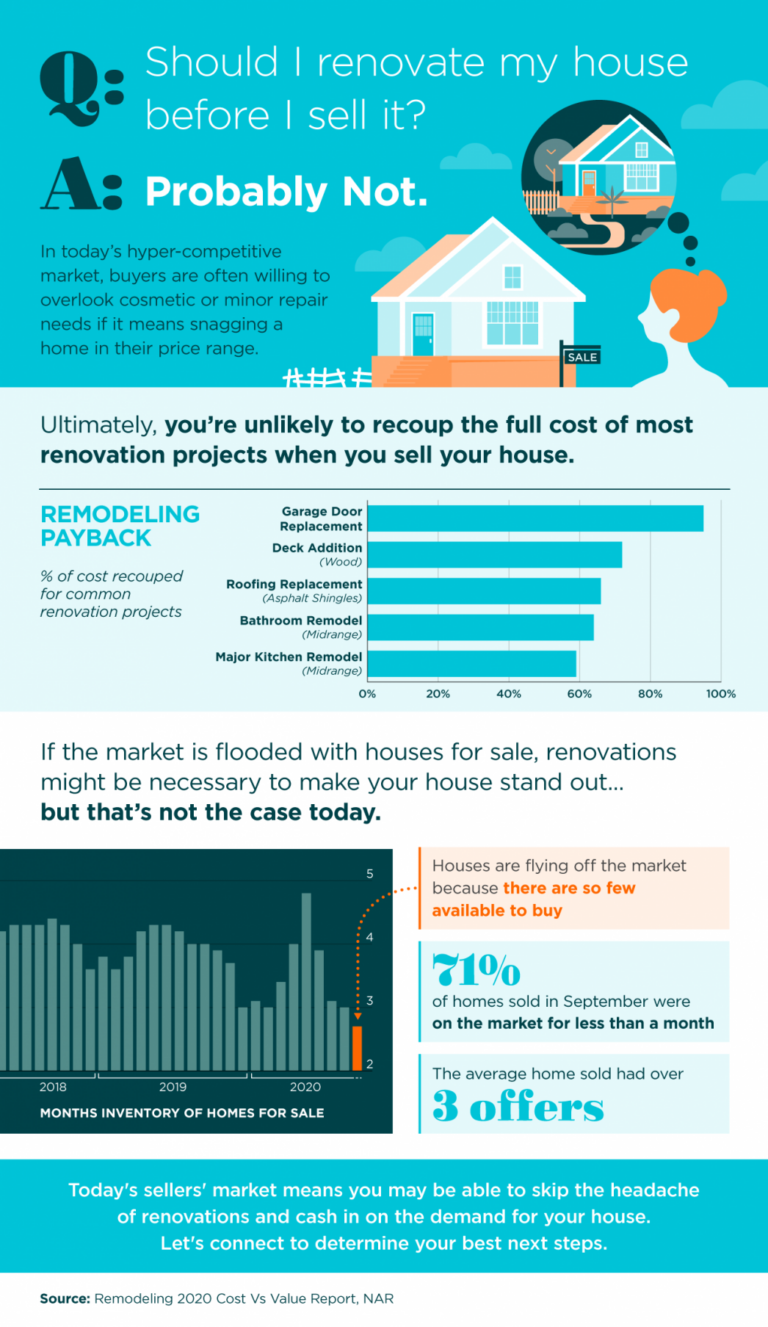
Not all home “improvements” add value. Here are a few improvements that might seem like good ideas, but often aren’t worth the investment.

Trendy decorating
Your may have a passion for oriental-influenced black lacquer furniture and animal prints, and they may be the hottest new decorating trend, but five years down the road you may find that trends have done a 180. Decorate for your own lifestyle and enjoyment, but when it comes time to stage your home for selling, take your stager’s advice.

Almost ANY do-it-yourself project
OK, so you may be able to handle hanging your own towel racks, but don’t tackle projects that are beyond your skills. It’s a common conception that DIY projects will always save money, but the flip side is that without the right skills and/or tools, you may end up with a finished project that looks less than professional.

Expensive, high-end projects
It’s a common misconception that high-end projects can add high-end value. Often these types of projects can result in over-improving your home for it’s value and the surrounding neighborhood. The truth is that smaller projects like new roofs and upgraded entry doors can often recoup much more of their costs.

The bottom line
If you’re thinking about renovations or improvements, start by thinking about your home’s value and the other homes in your neighborhood. And remember that it’s perfectly OK to do any kind of remodeling that enhances your own enjoyment of the home and suits your lifestyle. It is, after all, your home… just don’t expect it to always pay off!

Questions about home improvements? Ask Beth Ann >>
Share and Enjoy:
  • Digg
  • del.icio.us
  • Facebook
  • Google
  • Reddit
  • StumbleUpon
  • Technorati
  • Tumblr
  • Yahoo! Buzz

Understanding the MLS system

January 14th, 2012


One of your most powerful tools when selling is the access to your local MLS service that real estates professionals provide. Here’s a short guide to understanding what the MLS is all about.

Before the glossy brochure is ready or the “for sale” sign goes up in the yard, chances are your home is already up on the MLS (Multiple Listing Service.) Without question, it’s one of the most powerful tools a real estate professional has at their disposal to help you sell your home as quickly as possible. The MLS is essentially a wide-ranging database that makes comprehensive information about your home available to other real estate professionals and affiliates. Agents are constantly searching the MLS for listings that suit their clients’ needs.

How the MLS helps sell your home
By making your home visible to a vast network of agents and real estate professionals, you’re giving your home key exposure to serious home shoppers. Most importantly, buyers working with agents are generally pre-qualified and actively engaged in their home search. Having your home listed in the MLS not only exposes your home to the largest number of buyers, but also greatly expands the number of real estate professionals working to market your home.

MLS vs. online information
While the internet has revolutionized how people search for information about homes, the MLS still remains the preeminent tool for home sales. Home buyers often believe they can access all MLS data though free internet listing services, but these sites often contain data that is inaccurate, outdated, and doesn’t match the scope of that available through the MLS.

Questions about the MLS? Ask Beth Ann >>
Share This Story
Share and Enjoy:
  • Digg
  • del.icio.us
  • Facebook
  • Google
  • Reddit
  • StumbleUpon
  • Technorati
  • Tumblr
  • Yahoo! Buzz

What’s your home buying personality type?

January 14th, 2012

Knowing how your own personality affects home purchases can help you be a more well-rounded – and better prepared- buyer.

We all have our own way of looking at things, our personal “filter” through which everything must pass when making a decision. Our viewpoint is often deeply rooted in our individual wants, needs, life experiences, and long-held opinions. Studies increasingly find that personality type has a huge impact on how a person makes buying decisions. These are a few home buying personality types we’ve found. See if any of these sound familiar:

1. The visual shopper
The visual shopper is driven by the visual (and emotional) impact of what they see before them. They can be wowed by immaculate staging and, conversely, might not be able to see beyond a home’s hideous wallpaper and/or furnishings.

2. The handyman mindset.
The “handyman” personality type is often a DIYer whose main focus is on the home’s infrastructure. While knowledge of a home’s integral systems is certainly a key consideration, there are many other important factors that contribute to the overall picture. No home inspection comes back without a few surprises (especially with older homes) and the handyman can often let a great deal slip away by being not being able to see beyond the mechanicals.

3. Show me the money.
Everybody likes a good deal, but being overly focused on money matters can sometimes be a disadvantage, making a buyer seem detached, aggressive, and occasionally downright disrespectful. While it’s still a buyer’s market, remember that there are many markets making a turnaround. Nobody wants to lose a house that they really love because of a few dollars.

4. Neighborhood tunnel-vision.
Being in the right neighborhood is certainly important. The old “location, location, location” mantra exists for good reason. However, don’t be so focused on a particular home and its location that you become too forgiving of its faults.

The best blend of personalities for home buying
Each of these four personality types can be highly useful viewpoints, but they can also be detrimental when taken to extremes. Ideally, what you want to keep in mind when buying a home is balance and flexibility. The “perfect” home probably doesn’t exist, and in the end it’s all about finding the home that’s not absolutely perfect, but the one that is the best fit for you and your family. Retaining a modicum of flexibility and reason in your shopping tendencies (and knowing your own strengths and weaknesses) can help you make the choice that is truly the best one for you.

Questions about bouying personality? Ask Beth Ann >>
Share This Story
Share and Enjoy:
  • Digg
  • del.icio.us
  • Facebook
  • Google
  • Reddit
  • StumbleUpon
  • Technorati
  • Tumblr
  • Yahoo! Buzz

The Trend of Multi-generational Living

January 11th, 2012

Multi-generational living has become a trend in the housing industry. Home builders are building homes with two master suites to accommodate parents  moving in with their adult children and grown children moving back in with their parents. Many college grads move home to live with Mom and Dad while they job search. Siblings are moving in with one another after a home foreclosure. Across America, the need for home design that supports multi-generational living is on the rise.

“Factors such as job losses, home foreclosures and a changing attitude toward multi-generational living have all contributed to the rise,” said Sarah Reep, director of designer relations and education at KraftMaid Cabinetry. “Now families are finding relatives at both ends of the age spectrum living together under one roof.” We are seeing more five bedroom homes in the Atlanta market to accommodate these extended families.

To understand how this collision of social, economic and generational influences will impact kitchen design, Masco Cabinetry commissioned the GenShift 2011 study.

“Living in a multi-generational home can be a great experience, but it can also be very challenging,” added Reep. “It’s important to take each generation’s ideas and needs into consideration, especially when it comes to home design.”

To keep multi-generational households running smoothly, Reep recommends the following tips:

Get creative with lighting. Different tasks and generations require various levels of lighting. A combination of recessed, pendant and under-cabinet lighting provides both aesthetics and functionality. Adding dimmer switches is a way to add even more flexibility.

Add a splash of color. While monochromatic color schemes have been popular in recent years, older generations may prefer contrast between countertops and cabinets in order to maximize visual acuity.

Vary countertop heights. Lowered counters will create a workspace for small children, wheelchair users and those who prefer to sit while preparing meals. Homeowners can also use the varied heights for different tasks, such as lower counters for kneading dough and higher counters for cutting vegetables.

Install the right hardware. Older or smaller hands may have trouble grasping or pulling certain types of kitchen hardware. Consider larger drawer and cabinet handles that are easier to grasp and more ergonomically friendly.

Keep counters clutter-free. The GenShift 2011 study found a common theme when it comes to kitchen cabinetry accessories-more storage in a clean design style. Creative storage solutions like a wall appliance garage and pull-out cabinets create easily accessible storage places for “must-have” items.

For more information on the GenShift 2011 study, visit www.genshiftkitchen.com. For more design tips from Sarah Reep, visit www.kraftmaidbydesign.com.

SOURCE:
KraftMaid

Share and Enjoy:
  • Digg
  • del.icio.us
  • Facebook
  • Google
  • Reddit
  • StumbleUpon
  • Technorati
  • Tumblr
  • Yahoo! Buzz

Tips to Buying a Home in 2012!

January 11th, 2012

We all make New Year’s resolutions or goals and many of us do very little to achieve these goals. If your goal for 2012 is a brand new home then you have come to the right place. Here are some handy tips to make that goal a reality in 2012!

1. Improve Your Credit Score- When you first apply for a mortgage, banks and mortgage companies will pull your credit report. Be ready for this by pulling your report first and finding out your credit score. The higher your credit score, the more trustworthy they’ll view you. For a free credit score Visit Quizzle . It also has other tools that will help you to manage your money and is totally free.

2. Determine what you can afford- There are many online calculators that allow you to estimate “how much home” you can afford. Paran Homes has preferred lenders that will pre-qualify you for a loan or you can use their mortgage calculator here. There is never any obligation and you will know what you need to do to move forward.

3. Save Money for a Down Payment and Closing Costs -Generally, lenders want at least 20 percent of the home’s purchase price as a down payment. If you can pay more, you may qualify for a larger loan. FHA loans offer several options and might be just what you need. Your down payment can be as low as 3.5% of the purchase price, and most of your closing costs and fees can be included in the loan. Available on 1-4 unit properties. Talk to one of our preferred lenders today for more information.

4. Consider All Costs of Home Ownership -Besides your monthly house payment, make sure you can afford all the other costs associated with home ownership, such as property taxes, homeowners’ insurance, homeowners’ association fees, utilities, maintenance and repairs, and home improvements.

To find out more you can visit http://www.atlantarealestateforum.com/is-finding-a-new-home-your-new-years-resolution-56156/?utm_source=feedburner&utm_medium=email&utm_campaign=Feed%3A+AtlantaRealEstateForum+%28Atlanta+Real+Estate+Forum%29

Share and Enjoy:
  • Digg
  • del.icio.us
  • Facebook
  • Google
  • Reddit
  • StumbleUpon
  • Technorati
  • Tumblr
  • Yahoo! Buzz

Down Payment Assistance for 1st Time Homebuyers

January 11th, 2012

Great information provided by Atlanta Real Estate Forum……

As one of GA Home Foreclosures’ preferred lenders, Academy Mortgage Corporation provides a wide range of financing opportunities. They are happy to remind homebuyers about a great down-payment assistance first time homebuyer programfor those who have been renting for the past three or more years:  the Georgia Dream Program. This program, offered through the Department of Community Affairs, provides down payment assistant for residents of the state of Georgia.  Even better, by using one of our preferred lenders to purchase one of our investor-owned foreclosures, we will pay 2 percent of your closing costs.

There are three types of programs within the Georgia Dream. The Standard Program provides $5,000 in down payment/closing costs for any resident of the state of Georgia.

The PEN (Protectors-Educators-Nurses) provides $7,500 on down payment/closing costs for any resident employed in the military, public safety, education and the health care industry.

The CHOICE program provides $7,500 as well, but for households with individuals living with disabilities.

All of these programs have household income limitations and sales price maximums depending on the location of the subject property. Within the MSA-Atlanta area, the maximum household income is $71,000 for a one to two person household and $82,000 for a household of three or more. The maximum purchase price is $250,000. For properties outside the Atlanta-MSA, the maximum sales price is $200,000 with household income for one to two person families at $61,000 and $70,000 for a family of three or more. Unlike most down-payment assistance programs which are county-specific, the Georgia Dream Program can help anyone in the state.

Share and Enjoy:
  • Digg
  • del.icio.us
  • Facebook
  • Google
  • Reddit
  • StumbleUpon
  • Technorati
  • Tumblr
  • Yahoo! Buzz

Foreclosure and short sales on the Rise?

January 10th, 2012

According to  data recently released by RealtyTrac, home foreclosure rates dropped 3 percent in November 2011. Across the nation, default notices, scheduled auctions and bank repossessions declined and were 14% lower than 2010’s numbers.  The good news for the Atlanta real estate industry is that as the foreclosure rate drops, people start to buy Atlanta new homes again. This is one of the predictions that David Ellis of the Greater Atlanta Home Builders Association made on Atlanta Real Estate Forum Radio. Make sure to listen to this show for his other four predictions.

Despite the good news, there is reason to believe that more foreclosure may be setting in soon, according to a recent article by Builder.com. This was the narrowest drop in 12 months. James Saccacio,  RealtyTrac’s co-founder, suggests these may be REOs or short sales seen early in 2012.

California, Arizona and Massachusetts are already reporting annual foreclosure increases, which are indicative of what other states might be seeing soon. But RealtyTrac spokesman Darin Blomquist says the news might not be as awful as it seems because November’s comparison is being made against last year’s artificially low numbers. Last November’s figures were plagued with paperwork and robo-signing issues. “It’s like a credit card. That money isn’t coming out of your account when you first swipe your card, but eventually the money does come out,” Blomquist said. “So things are looking worse than they actually are.”

Blomquist predicts increases in foreclosure rates ranging from 5 to 10% in markets across the country, but certain markets will experience more dramatic rises because the delay has been more pronounced.

For example, this happened to California in November. With 63,689 filings last month, the state had more foreclosures than any other and accounted for 28% of the nationwide total. Aside from Nevada, California then went on to have the second-highest foreclosure rate. Unfortunately, Georgia’s number of filings made it in the top five. Georgia home foreclosure rates also placed in the top five foreclosure rates.

By the end of this new year and the beginning of 2013, Blomquist hopes speed bumps on the road to recovery will even out and foreclosure filings will begin declining more steadily.

Share and Enjoy:
  • Digg
  • del.icio.us
  • Facebook
  • Google
  • Reddit
  • StumbleUpon
  • Technorati
  • Tumblr
  • Yahoo! Buzz